
Understanding the Difference Between Anxiety and Stress
In today's fast-paced world, feeling overwhelmed has become common. Many people use the terms stress and anxiety interchangeably, but they are not the same. Understanding the difference is important because untreated anxiety can significantly affect your emotional, physical, and social well-being. If you are struggling with persistent worry or emotional distress, consulting an experienced Anxiety Therapist in Mumbai like Dr. Naazneen Ladak can help you regain control and improve your quality of life.
What Is Stress?
Stress is the body's natural response to a challenging situation or external pressure. It can be triggered by work deadlines, financial concerns, family responsibilities, health issues, or major life changes.
Common Symptoms of Stress:
- Feeling overwhelmed
- Irritability or mood swings
- Difficulty concentrating
- Headaches and muscle tension
- Sleep disturbances
- Fatigue
The good news is that stress usually subsides once the stressful situation is resolved or managed effectively.
What Is Anxiety?
Anxiety is a mental health condition characterized by excessive fear, worry, or nervousness that may persist even when there is no immediate threat. Unlike stress, anxiety often continues long after the triggering event has passed.
Common Symptoms of Anxiety:
- Constant worrying
- Racing thoughts
- Restlessness
- Rapid heartbeat
- Shortness of breath
- Panic attacks
- Trouble sleeping
- Difficulty controlling fears
If anxiety begins interfering with your daily life, relationships, work, or studies, seeking help from an Anxiety Therapist in Mumbai is highly recommended.
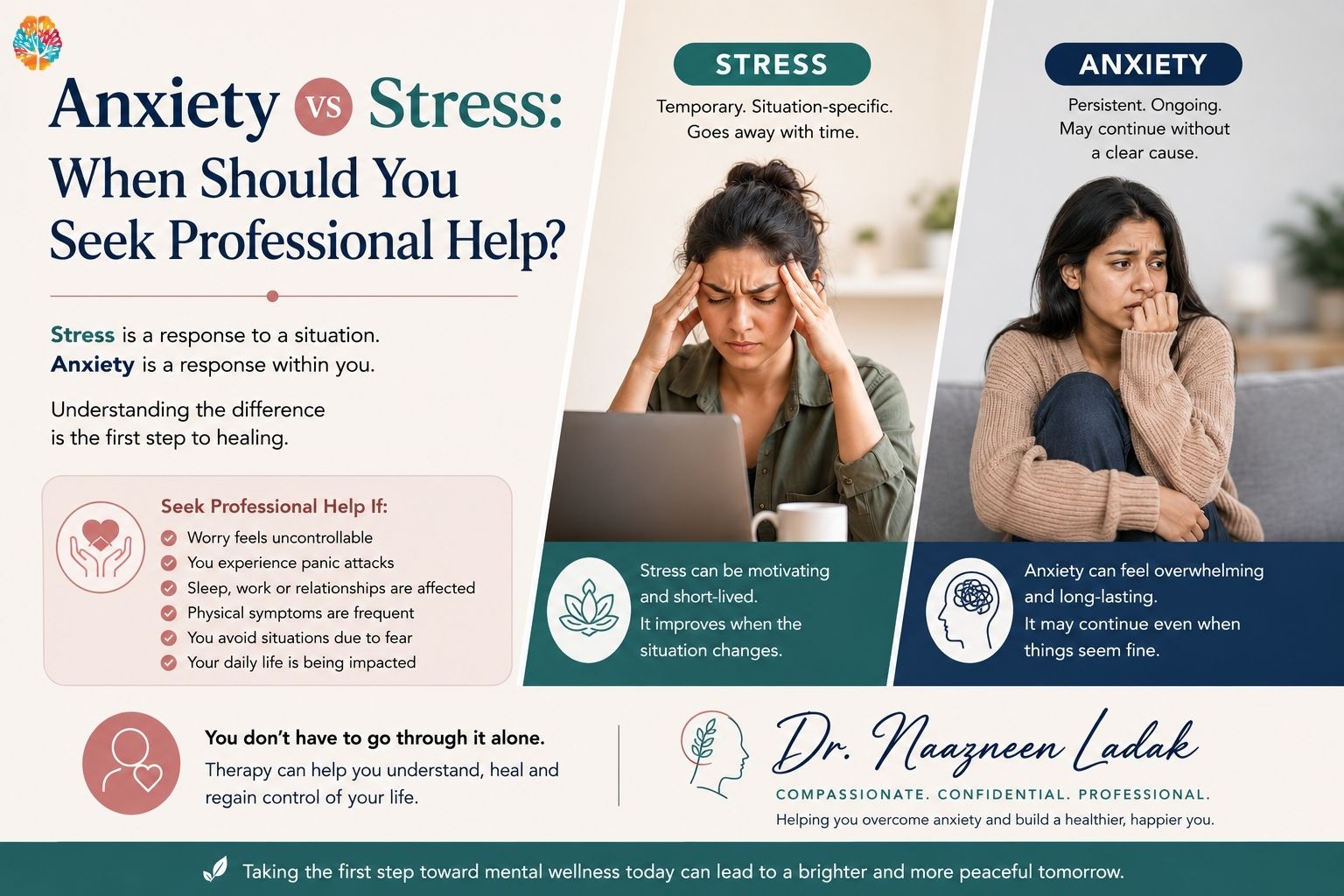
Key Differences Between Stress and Anxiety
|
Stress |
Anxiety |
|
Usually caused by an external situation |
Can occur without a clear cause |
|
Temporary and situation-specific |
Persistent and ongoing |
|
Improves when the stressor is removed |
May continue despite circumstances improving |
|
Can motivate action |
Often causes avoidance and fear |
|
Generally manageable with lifestyle changes |
May require professional treatment |
When Does Stress Turn Into Anxiety?
Stress can develop into anxiety when it becomes chronic and begins affecting your mental and physical health. Signs that stress may be evolving into anxiety include:
- Constant worrying even after problems are resolved
- Frequent panic attacks
- Avoiding social situations
- Difficulty functioning at work or home
- Persistent feelings of fear or dread
- Increased irritability and emotional exhaustion
Recognizing these signs early can prevent long-term mental health complications.
When Should You Seek Professional Help?
While occasional stress and anxiety are normal, professional support becomes important when symptoms start affecting daily life.
Consider Seeking Help If:
1. Your Worries Feel Uncontrollable
If you spend most of your day worrying and find it difficult to stop negative thoughts, therapy can help identify and manage these patterns.
2. Anxiety Is Affecting Your Work or Studies
Difficulty concentrating, missed deadlines, reduced productivity, or declining academic performance may indicate a deeper issue.
3. You Experience Panic Attacks
Sudden episodes of intense fear, chest tightness, dizziness, and shortness of breath should not be ignored.
4. Physical Symptoms Are Becoming Frequent
Chronic headaches, digestive issues, insomnia, muscle tension, and fatigue are often linked to prolonged anxiety.
5. You Avoid Situations Due to Fear
Avoiding social gatherings, travel, presentations, or daily activities because of anxiety can significantly impact your quality of life.
6. Your Relationships Are Suffering
Persistent anxiety can create misunderstandings, emotional distance, and communication difficulties with loved ones.
How Therapy Can Help
Working with a qualified Anxiety Therapist in Mumbai can provide effective tools to manage symptoms and improve emotional resilience.
Benefits of Anxiety Therapy:
- Understanding anxiety triggers
- Learning healthy coping mechanisms
- Managing panic attacks
- Improving emotional regulation
- Building confidence and self-esteem
- Enhancing relationships
- Developing long-term stress management skills
Therapy offers a safe and supportive environment to explore concerns and create personalized strategies for recovery.
Why Choose Dr. Naazneen Ladak?
Dr. Naazneen Ladak is dedicated to helping individuals overcome anxiety, stress, and emotional challenges through compassionate and evidence-based therapeutic approaches. Her personalized treatment plans focus on understanding each individual's unique needs, helping them achieve lasting emotional well-being and mental resilience.
Whether you are experiencing workplace stress, social anxiety, panic attacks, or persistent worry, professional guidance can make a meaningful difference in your recovery journey.
Conclusion
Stress and anxiety may share similar symptoms, but they are distinct experiences that require different approaches to management. While stress is often temporary and linked to specific situations, anxiety can persist and affect multiple areas of life. If your symptoms are becoming overwhelming, seeking support from an experienced Anxiety Therapist in Mumbai can help you regain balance and confidence.
Dr. Naazneen Ladak provides professional, compassionate care to help individuals navigate anxiety and build healthier, more fulfilling lives. Taking the first step toward mental wellness today can lead to a brighter and more peaceful tomorrow.