

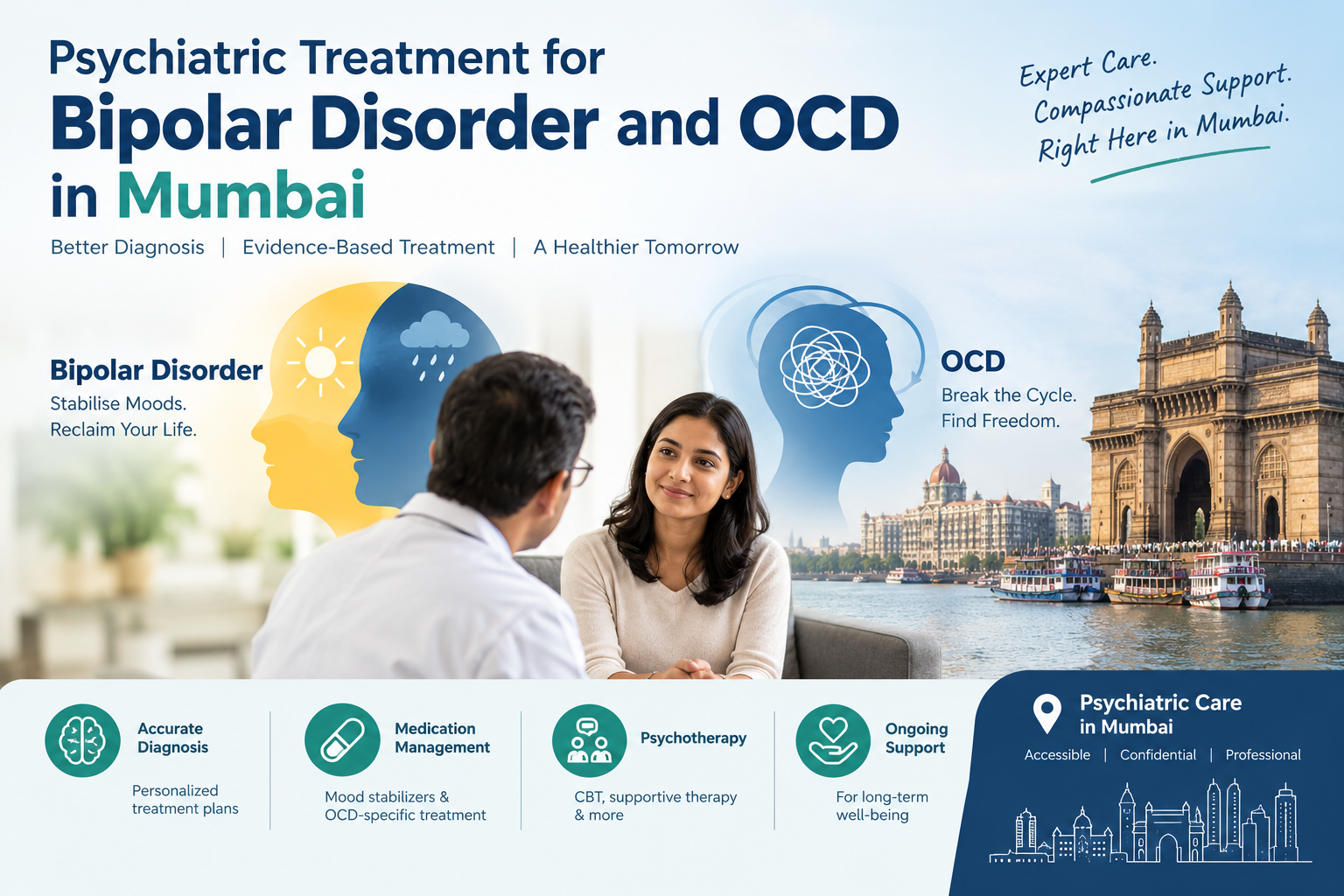
Bipolar disorder and Obsessive-Compulsive Disorder (OCD) are different mental health conditions that can affect mood, thoughts, behaviour, relationships, and everyday functioning. Both can be distressing, but appropriate professional assessment and treatment can help individuals manage symptoms and work towards better mental well-being.
For people looking for psychiatric treatment in Mumbai, consulting a qualified mental health professional can help clarify symptoms and identify an appropriate treatment plan.
Dr. Naazneen provides professional psychiatric and mental health support in a comfortable, confidential, and non-judgmental setting.
What Is Bipolar Disorder?
Bipolar disorder is a mental health condition involving episodes of significant mood and energy changes. These can include depressive episodes and periods of elevated or unusually irritable mood, known as manic or hypomanic episodes depending on their severity and duration.
Symptoms of a Depressive Episode
A person may experience:
- Persistent sadness or low mood
- Loss of interest in usual activities
- Low energy or fatigue
- Difficulty concentrating
- Changes in sleep
- Changes in appetite
- Feelings of guilt or worthlessness
- Reduced motivation
- Withdrawal from everyday activities
Symptoms of Mania or Hypomania
Depending on the type and severity of bipolar disorder, elevated or irritable periods may involve:
- Increased energy
- Reduced need for sleep
- Racing thoughts
- Increased talking
- Greater activity or restlessness
- Unusually high confidence
- Impulsive decisions
- Increased involvement in potentially risky activities
The symptoms and their pattern can vary from person to person. A detailed psychiatric assessment is important before determining whether symptoms are related to bipolar disorder or another condition.
What Is OCD?
Obsessive-Compulsive Disorder is characterised by recurring obsessions, compulsions, or both.
Obsessions are unwanted and recurring thoughts, images, or urges that can cause anxiety or distress.
Compulsions are repetitive behaviours or mental acts that a person feels driven to perform, often in response to an obsession.
Examples may include:
- Repeated handwashing or cleaning
- Checking locks, switches, or appliances repeatedly
- Fear of contamination
- Repeatedly seeking reassurance
- Counting or arranging things in a particular way
- Repeatedly reviewing thoughts or events
- Performing mental rituals
Having an occasional intrusive thought or checking something more than once does not necessarily indicate OCD. The condition involves persistent symptoms that cause significant distress or interfere with daily functioning.
Why Psychiatric Assessment Matters
Bipolar disorder and OCD require careful assessment because symptoms can overlap with other mental health or medical conditions.
For example, changes in sleep, energy, concentration, anxiety, or mood can occur for many different reasons.
During a psychiatric assessment, the professional may consider:
- Current symptoms
- Duration and frequency of symptoms
- Changes in mood and energy
- Sleep patterns
- Intrusive thoughts and compulsive behaviours
- Previous mental health treatment
- Current medications
- Medical history
- Family history
- Substance use where relevant
- Impact on work, relationships, studies, and daily life
Understanding the pattern of symptoms over time can be particularly important when evaluating bipolar disorder.
Psychiatric Treatment for Bipolar Disorder
Treatment for bipolar disorder is generally individualised. Depending on the person's symptoms and circumstances, treatment may involve medication, psychotherapy, education about the condition, lifestyle support, and regular monitoring.
Medication Management
Psychiatric medication may be an important part of treatment for bipolar disorder. A psychiatrist can assess whether medication is appropriate and monitor its effectiveness and potential side effects.
Treatment should be tailored to the individual's symptoms, medical history, other medications, and overall circumstances.
It is important not to start, stop, or change psychiatric medication without medical guidance.
Psychological Therapy
Psychotherapy can complement psychiatric treatment and may help individuals:
- Recognise changes in mood and behaviour
- Identify potential triggers
- Develop healthier coping strategies
- Manage stress
- Improve communication and relationships
- Maintain consistent routines
- Recognise early warning signs of mood changes
Therapy and psychiatric care can work together when appropriate.
Psychiatric Treatment for OCD
Treatment for OCD may involve psychological therapy, medication, or a combination of approaches.
Therapy for OCD
Cognitive behavioural therapy (CBT), particularly Exposure and Response Prevention (ERP), is an established psychological treatment for OCD.
ERP involves gradually confronting situations or thoughts that trigger anxiety while learning to reduce or resist compulsive responses under appropriate professional guidance.
Therapy may help individuals understand:
- Obsessive thought patterns
- Compulsive behaviours
- Anxiety triggers
- Reassurance-seeking patterns
- Avoidance behaviours
- Healthier ways of responding to intrusive thoughts
Medication for OCD
A psychiatrist may also consider medication depending on the severity of symptoms and the individual's circumstances.
Medication decisions should be made by a qualified medical professional, with appropriate follow-up to monitor response and side effects.
Can Bipolar Disorder and OCD Occur Together?
Some individuals can experience symptoms of both bipolar disorder and OCD.
When more than one mental health condition is present, assessment and treatment may require careful consideration of the full symptom pattern.
For example, intrusive thoughts associated with OCD are different from the elevated mood, increased energy, or reduced need for sleep associated with mania or hypomania.
A psychiatrist can evaluate the timing and nature of symptoms and develop a treatment approach based on the individual's overall presentation.
The Importance of Ongoing Follow-Up
Mental health treatment is often an ongoing process.
Regular follow-up can help a psychiatrist understand:
- Whether symptoms are improving
- Whether new symptoms have appeared
- How well treatment is being tolerated
- Whether medication needs adjustment
- Whether additional psychological support may be useful
- How symptoms are affecting everyday functioning
Keeping track of mood, sleep, anxiety, intrusive thoughts, and significant behavioural changes can also help provide useful information during follow-up appointments.
When Should You Seek Psychiatric Help?
Consider speaking with a mental health professional when symptoms become persistent, distressing, or disruptive.
Professional assessment may be particularly useful if you notice:
- Significant changes in mood or energy
- Reduced need for sleep accompanied by increased energy
- Persistent low mood
- Recurring intrusive thoughts
- Repetitive behaviours that are difficult to control
- Difficulty managing work, studies, or relationships
- Increasing anxiety or emotional distress
- Impulsive or risky behaviour
- Symptoms that interfere with everyday responsibilities
If someone is experiencing thoughts of suicide or self-harm, immediate emergency or crisis support should be sought.
Choosing Psychiatric Care in Mumbai
If you are searching for psychiatric treatment for bipolar disorder and OCD in Mumbai, consider the professional's qualifications, clinical experience, areas of practice, treatment approach, availability of follow-up care, and accessibility.
It is also important to feel comfortable asking questions about your assessment and treatment.
Before beginning treatment, you may want to ask:
- What could be contributing to my symptoms?
- What type of assessment is needed?
- What treatment options are available?
- Will therapy be part of the treatment plan?
- If medication is recommended, what should I know about it?
- How often will follow-up appointments be needed?
These questions can help you better understand your care.
Psychiatric Support with Dr. Naazneen
Dr. Naazneen provides professional psychiatric and mental health support for individuals experiencing mood, anxiety, obsessive-compulsive, and other psychological concerns.
The process can begin with understanding the individual's symptoms, personal history, medical background, and treatment goals. Based on the assessment, appropriate treatment and follow-up options can be discussed.
A respectful and supportive environment can make it easier to discuss thoughts, emotions, behaviours, and experiences that may be difficult to share elsewhere.
Taking the Next Step
Bipolar disorder and OCD can affect many areas of life, but professional treatment can help individuals understand their symptoms and explore appropriate ways to manage them.
If you or someone you know is experiencing persistent mood changes, intrusive thoughts, compulsive behaviours, or other mental health concerns, consulting a qualified psychiatrist can be an important step towards understanding the situation.
For individuals seeking psychiatric treatment for bipolar disorder and OCD in Mumbai, professional assessment and personalised care can provide a structured path towards better symptom management and overall mental well-being.
Visit : https://share.google/ioZCjU7GvgasCxFGW
Call : 099208 33386